Kate thought…
Recently, LinkedIn asked, ‘What do you do if your project management skills need an upgrade?‘

Actually, you can contribute to the topic and add your opinion there, a nice opportunity to be heard. I’m sure the approach is pretty obvious and can apply to any skill gap (I was likely impacted by the speech of Dave Thomas at GOTO 2015 when answer on this question.)
The Agile approach is widely applicable even as an answer on the question above, even though the title ‘Agile is dead’ is quite common in my Medium.com Daily Digest.
Anyway, I liked Dave Thomas’s presentation a lot, and one useful slide from that event says:
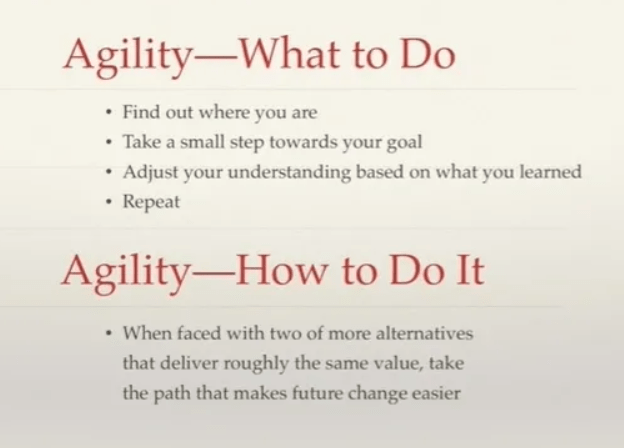
So, coming back to the initial LinkedIn question, let’s split the answers into two:
When realizing a gap in project management skills (or any other skills), the response should vary based on the nature of the gap. If it’s a bureaucratic requirement, such as certification, acquiring one could be beneficial even if just for formal acknowledgment.
However, if it’s a genuine skill deficiency impacting your work, more immediate and strategic actions are necessary.
First, remain calm and avoid hasty decisions driven by stress. Begin by clearly defining the skills gap. Understand exactly where you are in terms of skills and where you need to be. This can involve:
1. Find out where you are
- Self-Assessment: Evaluate your current competencies honestly.
2. Take a small step towards your goal
- at least get a solid intention to reach your goal
- Seeking Advice: Consult more experienced colleagues for insights or mentorship.
- Research: Utilize resources like books, articles, and platforms such as Medium.com for diverse perspectives and expert advice.
- Active Learning: Join professional forums or communities for dynamic engagement with peers.
3. Adjust your understanding based on what you learned
- Practice and Application: Implement new strategies in your work to solidify learning. Theory without practice is dead, and practice without theory is blind.
4. Repeat
- Iterate: Continuously refine your skills based on feedback and results.
Remember, agility in learning is key. Choose learning paths that not only address immediate needs but also make adapting to future changes easier.
I’m sure it is obvious, but let me summarise.
The balanced approach emphasizes both formal learning and practical, experiential learning, aligning with the principles of agility in project management.
P.S. Don’t bury Agile too soon.
 Kate Thought
Leave a comment